On this page (5 sections)
Mulches fall into two families. Organic mulches — bark, wood chips, pine needles, leaves, straw — decompose over a few years, improving the soil as they go, and need replacing. Inorganic mulches — gravel, pebbles, rubber, fabric — last much longer but add nothing to the soil. Here is how the common choices compare, according to Clemson Extension (South Carolina) and UF/IFAS (Florida).
At a glance
| Mulch | Depth | Strengths | Drawbacks |
|---|---|---|---|
| Pine bark | 2–3 in (nuggets to 4) | Attractive, dark; settles slowly — UF found it kept two-thirds of its depth after 2 years | Large nuggets can float away in heavy rain |
| Shredded hardwood | 2–3 in | Good weed control; does not wash away easily; decomposes slowly | Mixed hardwood can contain treated lumber (UF) |
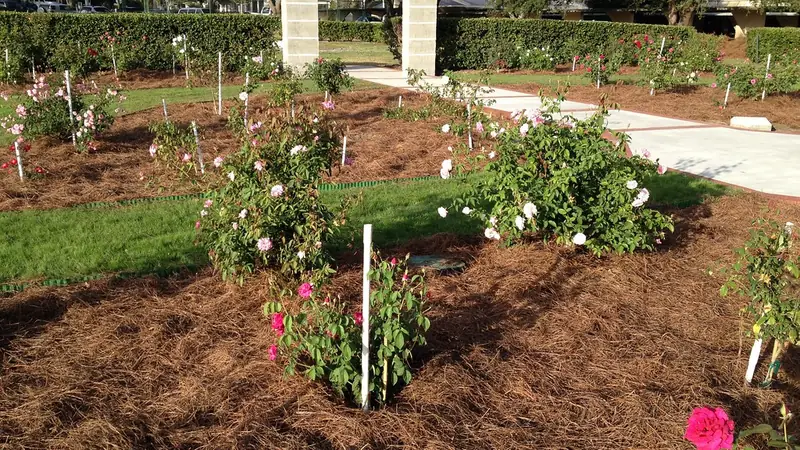
| Pine straw (needles) | 2–3 in | Interlocks and stays on slopes; lets air and water through; inexpensive | Breaks down and settles quickly |
| Wood chips | 2–3 in | Inexpensive; good for paths | Small chips use soil nitrogen; may attract termites; gone within about 2 years |
| Shredded leaves | 2–3 in for weed control; no more than 2 in finely shredded | Free; improves the soil | Whole leaves blow away; finely shredded leaves can mat |
| Grass clippings | 2 in, built up gradually | Free; adds nutrients | Mats if fresh and thick; check for herbicide-treated lawns |
| Straw | — | Good in vegetable gardens and over new seed | Decomposes fast; may sprout grain |
| Gravel and pebbles | about 1 in | Permanent | Hot in summer; may raise pH; not for acid-loving plants |
Depths and notes from Clemson HGIC 1604 and UF/IFAS Gardening Solutions.
Organic mulches in more detail
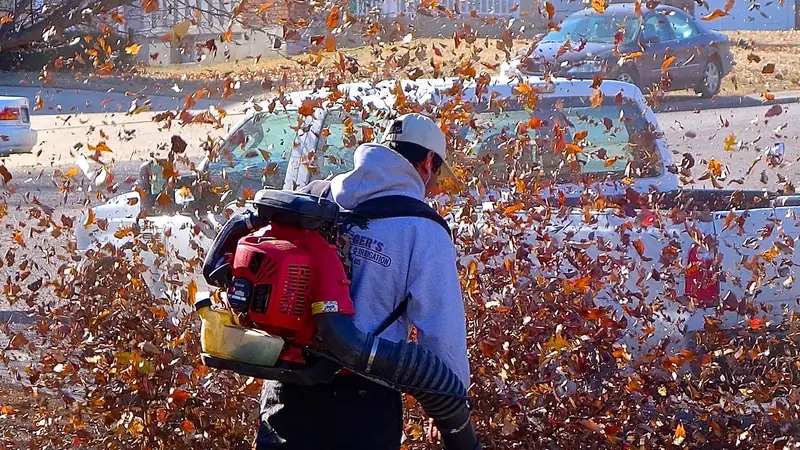
- Leaves — Clemson recommends shredding them coarsely with a shredder or mower: whole leaves blow away, while very finely shredded leaves don’t let water through. Oak and beech leaves suit acid-loving plants. See what to do with fall leaves.
- Leaf mold — partly decomposed leaves; Clemson calls it an excellent mulch, though well-rotted leaf mold is better dug in as a soil amendment.
- Grass clippings — Clemson says the best place for clippings is on the lawn. If you mulch with them, build up dry clippings gradually; fresh, thick layers form a solid mat.
- Hay — Clemson says never use hay (coastal bermudagrass) as mulch: too many weed seeds.
- Utility mulch — free tree-trimming chips from utility companies. UF/IFAS notes they can contain weed seeds and soil, so they suit driveways, paths and natural areas better than flower or vegetable beds.
- Cypress — UF/IFAS’s Florida-Friendly program does not recommend it, because it may come from wetland forests.
- Mixed hardwood — UF/IFAS warns some is made from recycled lumber that can contain chromated copper arsenate (CCA); don’t use it around edible gardens.
Inorganic mulches
- Gravel, pebbles, crushed stone — Clemson suggests them only for permanent plantings such as foundation shrubs, not around acid-loving plants, and notes they make the landscape hot in summer. UF/IFAS does not recommend rock mulch in garden beds at all, reserving it for paths, dry creek beds and under downspouts. See rock vs wood mulch.
- Rubber — UF/IFAS finds it less effective at suppressing weeds than organic mulch; it absorbs heat and can float away and leach chemicals.
- Black plastic — blocks weeds but also water and air; Clemson does not typically recommend it.
- Landscape fabric — lets water and air through and works best with several inches of mulch on top (Clemson). See landscape fabric under gravel or mulch.
Buying and spreading
Whatever you choose, one cubic yard covers 324 sq ft one inch deep (Clemson, UF). Get the volume from the Mulch Calculator, then compare bags with bulk delivery. Good mulch smells of fresh wood or earth; Clemson warns that mulch smelling of vinegar or ammonia is “sour” and can burn plants. Then follow how to mulch garden beds.
Sources
- Clemson Cooperative Extension HGIC 1604 — Mulch — Benefits of mulch, organic and inorganic materials, depths by texture, when to mulch, spacing from stems and buildings, tree rings and sour mulch.
- UF/IFAS Gardening Solutions — Choosing and Installing Mulches — Mulch types and their drawbacks, recommended depths, coverage per cubic yard and when to replenish (Florida).
Sources were checked when this guide was published. Where published guidance differs, this guide says so; for structural work, follow your local specification.
Worked examples are generated by the same tested calculation engine as our calculators. See our editorial policy and methodology.