On this page (7 sections)
Walk into any garden center and you will find two families of bed covering: organic mulches such as shredded hardwood, pine bark and pine needles, and inorganic ones — most often decorative rock. Clemson Extension’s verdict is that there is no single right answer; each has real advantages and disadvantages. Here is what extension sources say about each.
Wood and other organic mulches
- Natural insulator. Clemson calls this organic mulch’s biggest advantage: it helps retain moisture, keeping soil cool in summer and warm in winter.
- Feeds the soil. As it breaks down it adds nutrients — Utah State University (USU) notes organic mulches can supply all or part of the nutrients plants need.
- Needs replacing. The same decomposition means topping up every year or two. Clemson suggests maintaining a 2- to 3-inch layer and not letting it get deeper.
- Fresh wood caution. Clemson advises using wood mulch that has not been composted for at least six to eight months only on the surface around trees, shrubs and perennials — not mixed into soil or around shallow-rooted annuals. USU notes wood chips, sawdust and bark can tie up nitrogen.
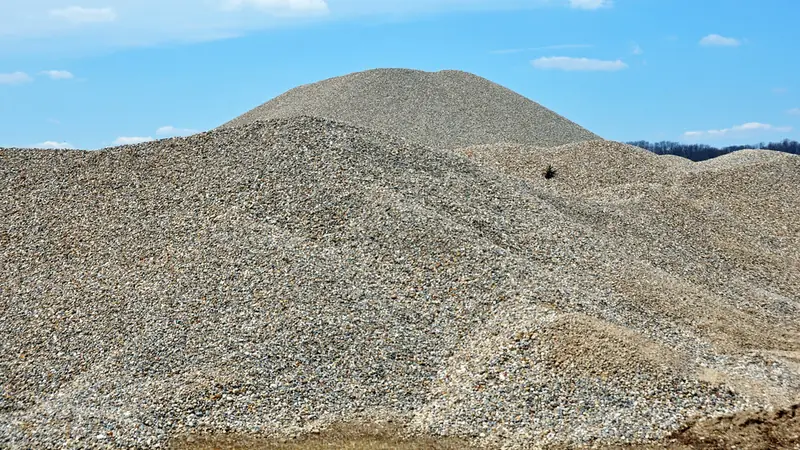
Rock and gravel
- Low maintenance. Clemson: once rock is in place, it will be there for years.
- Stays put on slopes and helps with erosion on hillsides.
- Holds heat. Clemson warns rock retains heat and raises the ground temperature, “leaving plants feeling like they are in a desert.”
- No benefit to plants or soil. Clemson says so directly, and Illinois Extension adds that from a horticultural perspective rock does not add any value to plants and may create more inhospitable conditions.
- Weeds still come. Clemson notes weed seeds can establish in the larger spaces between stones.
Side by side
| Organic mulch | Rock | |
|---|---|---|
| Lasts | Needs topping up every 1–2 years | Years |
| Soil and plants | Adds organic matter and nutrients | No benefit |
| Soil temperature | Insulates: cooler in summer | Holds heat, raises temperature |
| Slopes | Can wash or slide | Stays in place |
| Weeds | Suppresses when deep enough | Seeds lodge between stones |
Summarised from Clemson HGIC, Utah State University Extension and Illinois Extension.
Where rock makes sense
Illinois Extension lists a few good uses: an alpine rock garden, places where plants won’t grow, or a bare spot for containers or a work area. Add paths, drip edges and steep slopes where organic mulch washes away. Clemson also suggests combining the two — rock to hold organic mulch in place on a sloped bed.
How deep?
USU’s guidance depends on the size of the material: 1 to 2 inches of fine, dense material (pieces under ½ inch) or 3 to 6 inches of coarse, fluffy material (½ to 3 inches). It also gives a handy figure: a 1-inch layer needs about 3 cubic yards per 1,000 sq ft.
| Bed area | 2 in deep | 3 in deep |
|---|---|---|
| 100 sq ft | 0.62 yd³ | 0.93 yd³ |
| 200 sq ft | 1.23 yd³ | 1.85 yd³ |
| 500 sq ft | 3.09 yd³ | 4.63 yd³ |
| 1,000 sq ft | 6.17 yd³ | 9.26 yd³ |
Exact volumes for level ground. Use the Mulch Calculator for bags or bulk, or the Gravel Calculator for stone by weight.
Fabric under rock?
USU notes landscape fabric resists tearing under decorative rock and lets water and air through. Illinois Extension cautions that over a few years its pores clog with sediment and weeds still arrive from above. See should you put landscape fabric under gravel or mulch?
Sources
- Clemson Cooperative Extension HGIC — Mulch or Rock: Which Do You Prefer? — Advantages and disadvantages of organic mulch and rock in landscape beds.
- Utah State University Extension — Using Mulches in Utah Landscapes and Gardens — Organic vs inorganic mulches, recommended depths, material per 1,000 sq ft and landscape fabric.
- Illinois Extension — The Disadvantages of Landscape Fabric — How landscape fabric performs over time under mulch and rock, and alternatives.
Sources were checked when this guide was published. Where published guidance differs, this guide says so; for structural work, follow your local specification.
Worked examples are generated by the same tested calculation engine as our calculators. See our editorial policy and methodology.