On this page (6 sections)
Pea gravel and crushed stone can look similar in a bag, and they cost roughly the same to move around, but they behave very differently once they are on the ground. The difference comes down to shape: one is rounded, the other angular. That single property decides how firm the surface feels, whether it stays put, and what it is good for.
What each material is
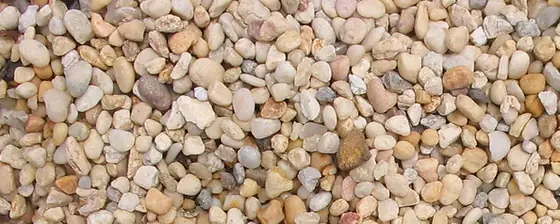
Pea gravel is small, smooth, rounded stone, commonly sold around 3/8 inch (about 10 mm), in mixed natural colours. The rounded shape comes from water-worn stone; it is screened to size and usually washed.
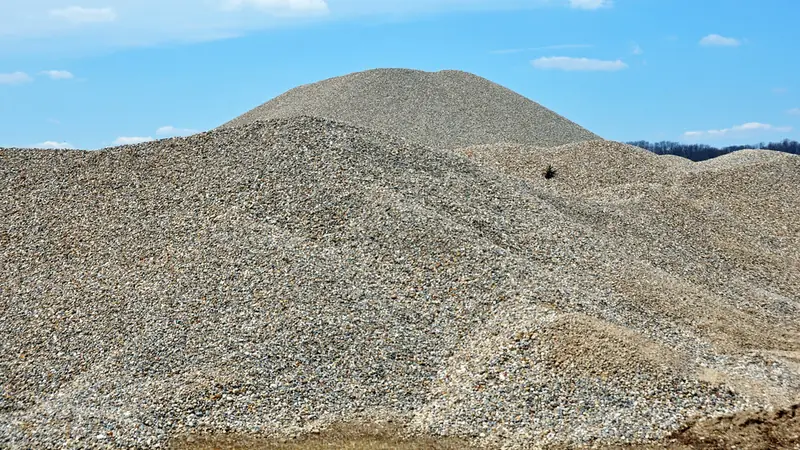
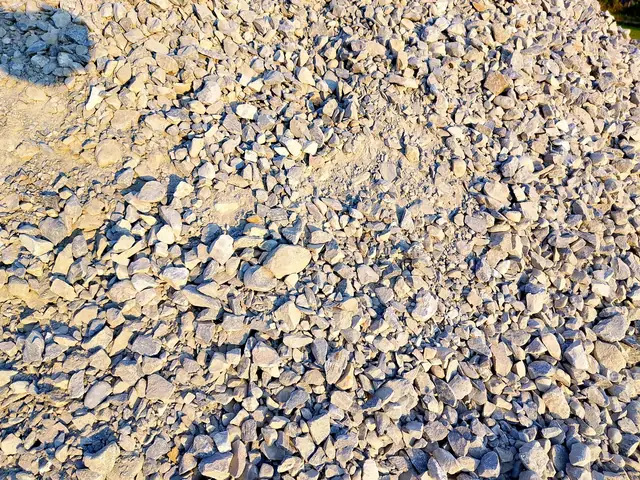
Crushed stone is quarried rock broken by machines, so the pieces have sharp, angular faces. It is sold by size: in the US, aggregate size numbers are standardised in ASTM D448 — No. 57, for example, runs roughly from 1 inch down to about 3/16 inch. Some crushed products are single-size and “clean”; others, such as crusher run (UK: Type 1), are deliberately graded from coarse stone down to dust so they pack tightly.
How they compare
| Property | Pea gravel | Crushed stone |
|---|---|---|
| Shape | Rounded, smooth | Angular, rough faces |
| Compaction | Does not lock together | Interlocks; graded mixes compact into a firm layer |
| Underfoot | Comfortable, but shifts and can feel loose if deep | Firmer; clean angular stone can feel rough barefoot |
| Wheels | Ruts and scatters; hard for wheelbarrows and strollers | Stable under tires, especially over a compacted base |
| Drainage | Free-draining | Clean stone drains freely; mixes with fines drain more slowly |
| Staying put | Migrates; needs edging | Moves less, particularly when compacted |
| Typical uses | Garden paths, patios, decorative beds, top dressing | Driveways, sub-bases, paths that take carts, drainage layers |
Which should you use?
Driveways and parking areas
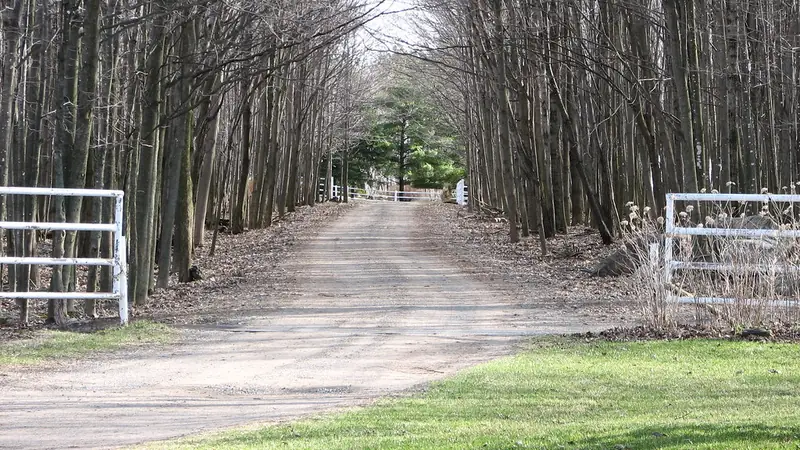
Crushed stone. Vehicles need a layer that interlocks: a compacted, graded base with an angular surface stone on top. Road-surface gravel works best as a well-graded mix rather than all one size, which is part of why rounded pea gravel ruts under tires. See how much gravel you need for a driveway.
Garden paths
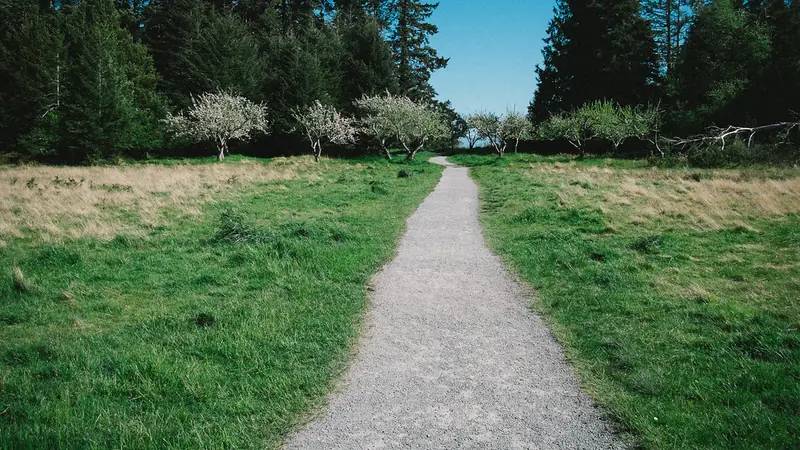
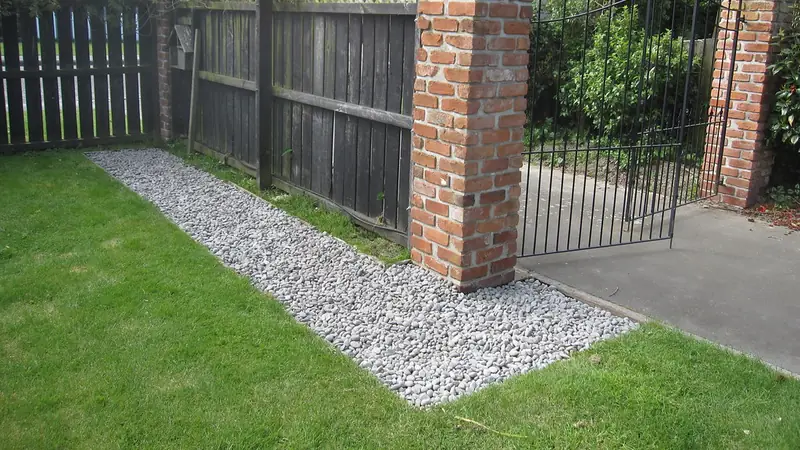
Either can work. Pea gravel looks soft and feels good underfoot, but keep the top layer thin (around 2 inches) and lay it over a firm, compacted base, with edging to hold it in. If the path takes wheelbarrows or bikes, a fine crushed stone is firmer. Our path planning guide walks through the choice step by step.
Patios and seating areas
Pea gravel is popular for informal seating areas because chairs settle into it comfortably. Crushed stone makes a firmer surface for tables that need to stay level.
Under paving or as a base
Crushed stone with fines, compacted in layers. Rounded stone does not lock together, so it makes a poor structural base.
Same volume, different weight
You calculate the volume of both materials the same way, but their typical bulk densities differ, so the weight — and the price if you buy by the ton — changes. For a 12 × 10 ft area, 3 inches deep (1.11 yd³):
| Material | Typical weight | Range |
|---|---|---|
| Pea gravel | 1.45 US tons | 1.36–1.59 |
| Crushed stone | 1.5 US tons | 1.36–1.64 |
| Crusher run (loose) | 1.78 US tons | 1.59–1.97 |
| Material | Typical range (lb/ft³) | US tons per yd³ | Tonnes per m³ |
|---|---|---|---|
| Pea gravel | 91–106 | 1.22–1.43 | 1.45–1.7 |
| Crushed stone (e.g. #57 / 20 mm clean) | 91–109 | 1.22–1.47 | 1.45–1.75 |
| Crusher run / Type 1 sub-base (loose) | 106–131 | 1.43–1.77 | 1.7–2.1 |
Typical values for loose, as-delivered material. They are planning approximations, not specifications — your supplier’s figure for their product always takes priority.
Using both together
Many good paths use both: a compacted crushed-stone base for stability and drainage, topped with a thin layer of pea gravel for looks and comfort. Calculate each layer separately — the Gravel Calculator for the base and the Pea Gravel Calculator for the top — or add both as zones in the Garden Material Planner.
Sources
- ASTM D448 — Standard Classification for Sizes of Aggregate for Road and Bridge Construction — Defines size numbers such as No. 57 and No. 8.
- Sakrete (Sika) — Pea gravel product information — Manufacturer description of pea gravel as small, rounded stone.
- FHWA — Gravel Roads Construction & Maintenance Guide (2015) — Shaping, crown and drainage of gravel surfaces. Not a national specification.
Sources were checked when this guide was published. Where published guidance differs, this guide says so; for structural work, follow your local specification.
Worked examples are generated by the same tested calculation engine as our calculators. See our editorial policy and methodology.