On this page (5 sections)
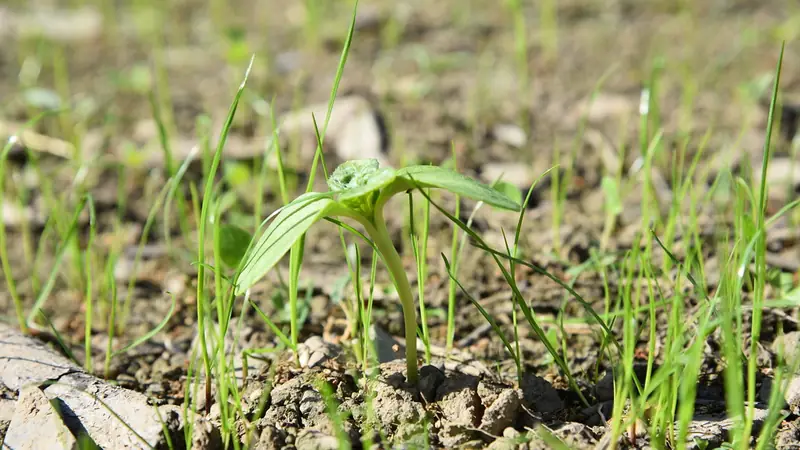
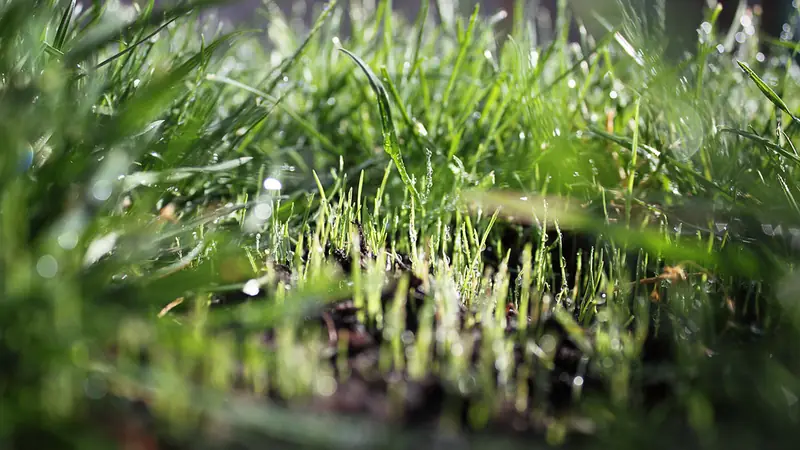
Overseeding means sowing grass seed into an existing lawn without tearing it up. University of Maryland Extension says cool-season lawns benefit from overseeding every autumn: it fills bare and sparse areas, thickens the turf so it crowds out weeds, and adds young grass of improved varieties that better resist disease and heat. Maryland notes this applies to cool-season lawns such as tall fescue — warm-season lawns are not overseeded this way.
When to overseed
Late summer to early fall, the best time to seed cool-season grass (see when to plant grass seed). Purdue Extension gives August 15 to September 15 as the optimum in Indiana, erring earlier in the north. Your county extension office can give local dates.
Step by step
- Test the soil. Maryland recommends a lab test so you know whether lime is needed. See how to test your soil.
- Deal with weeds — especially aggressive spreading ones. If you use an herbicide, Maryland says to check the label for any waiting period before seeding.
- Buy good seed of recommended varieties — see how to read a grass seed label.
- Mow short. Maryland suggests about 2 to 2½ inches; Purdue mows to 1 to 1½ inches. Short grass lets seed reach the soil and light reach the seedlings. Rake up the clippings.
- Rough up the soil. Seed must touch soil. Loosen the surface with a steel rake, or for larger lawns rent a core aerator, vertical mower or slit seeder (Maryland). Illinois Extension calls slit seeders a great tool for overseeding established lawns. More than one pass may be needed.
- Fertilize. Purdue applies a starter fertilizer before seeding. Maryland suggests applying any lime about a month before the fertilizer, or waiting until the end of the season.
- Sow in two directions. Maryland: split the seed in half, spread one half north–south and the other east–west, and set the spreader to half the rate.
- Press it in. Tamp seed down with the back of a rake, or use a water-filled roller on larger areas (Maryland).
Work out how much seed to buy for your lawn and the label rate with the Grass Seed Calculator.
Aftercare
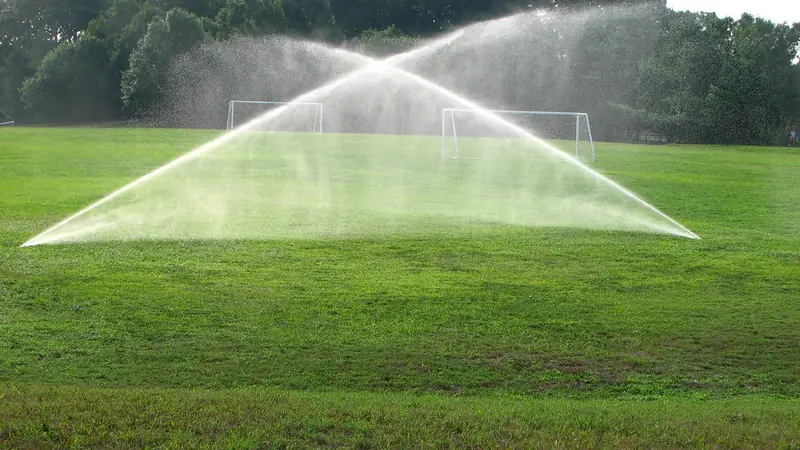
- Water little and often. Purdue suggests watering the seeded area 3–4 times a day for the first few weeks to keep the surface moist. See how to water new grass seed.
- Mow gradually up. Purdue mows at 1½ inches two or three times, then raises the height in ½-inch steps until it reaches the normal 2½ to 3½ inches.
- Feed again. Purdue fertilizes with a nitrogen-rich fertilizer about a month after germination — convert the rate to product with the Fertilizer Calculator.
Patching bare spots
Illinois Extension’s method for small patches: rake the soil surface, mix bagged topsoil and compost 50/50, then mix that with grass seed at three scoops of soil mix to one scoop of seed. Spread the mix on the bare spot, firm it by hand, and keep it moist until the grass is established.
Sources
- University of Maryland Extension — Maintaining an Established Lawn — Aeration, overseeding cool-season lawns step by step, fertilizer timing and thatch.
- Purdue Extension — Now Is the Time to Improve Your Home Lawn — Overseeding dates for cool-season grasses in Indiana, preparation, watering and mowing after seeding.
- Illinois Extension — Five Fall Tips for Cool-Season Lawn Care — Fall aeration, overseeding with a slit seeder, patching bare spots and fall fertilizing.
Sources were checked when this guide was published. Where published guidance differs, this guide says so; for structural work, follow your local specification.
Worked examples are generated by the same tested calculation engine as our calculators. See our editorial policy and methodology.