On this page (8 sections)
Topdressing means spreading a thin layer of material over an existing lawn and letting it work down into the soil. Clemson Extension describes it as the way to improve soil under an established lawn — where you cannot simply till in amendments — and to fill low spots and bare patches. Done lightly and repeatedly, it builds better soil over time.
Why topdress?
- Improve soil structure. Compost adds organic matter, improving drainage in clay and water-holding in sand.
- Fill gaps and low spots with topsoil or sand to smooth the surface.
- Help recovery after aeration and dethatching; Clemson notes compost topdressing can help control thatch through microbial activity.
Which material?
| Material | Use it for |
|---|---|
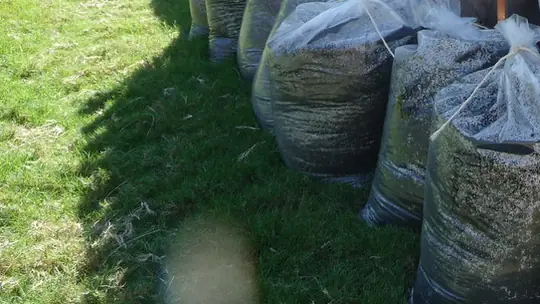
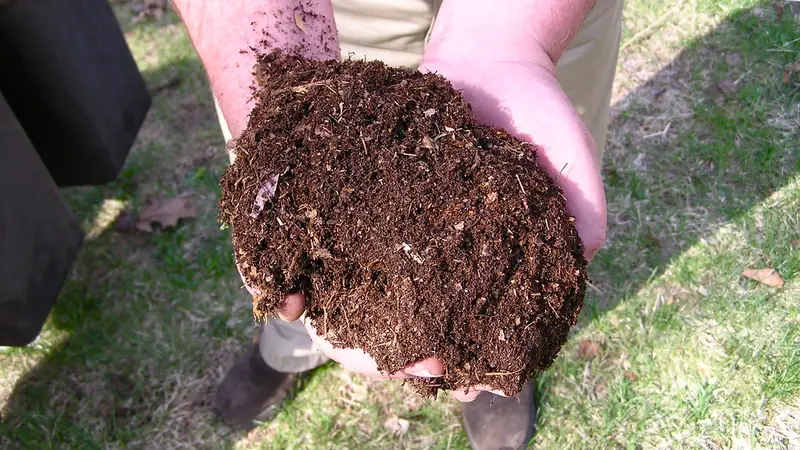
| Compost | Any soil type — adds organic matter |
| Topsoil | Filling low or bare spots; should match your native soil |
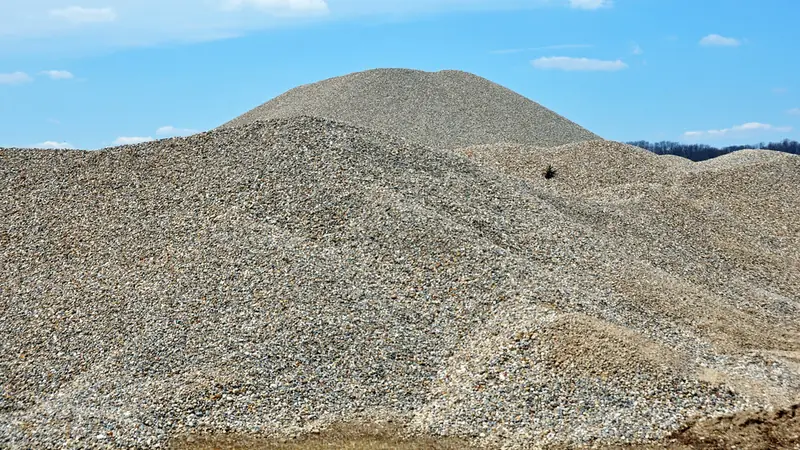
| Sand | Only where the native soil is sandy |
Clemson is emphatic about sand: it should be used only when the native soil is sandy. Golf greens and sports fields topdressed with sand are built on engineered all-sand root zones; a home lawn on native soil is not. If your soil is not sandy, use topsoil instead.
How much at a time
Keep each application light — Clemson says no more than ½ inch at a time. A thicker layer can stunt or shade the grass. Rake it lightly so the material sifts down between the blades; the grass should still be visible.
How much to order
| Depth | Volume | Order |
|---|---|---|
| ⅛ in | 10.4 cu ft | 0.39 cu yd |
| ¼ in | 20.8 cu ft | 0.77 cu yd |
| ½ in | 41.7 cu ft | 1.54 cu yd |
Exact volumes for a level area; the Cubic Yard Calculator handles any size, and how many bags in a cubic yard converts to bags.
Pair it with aeration
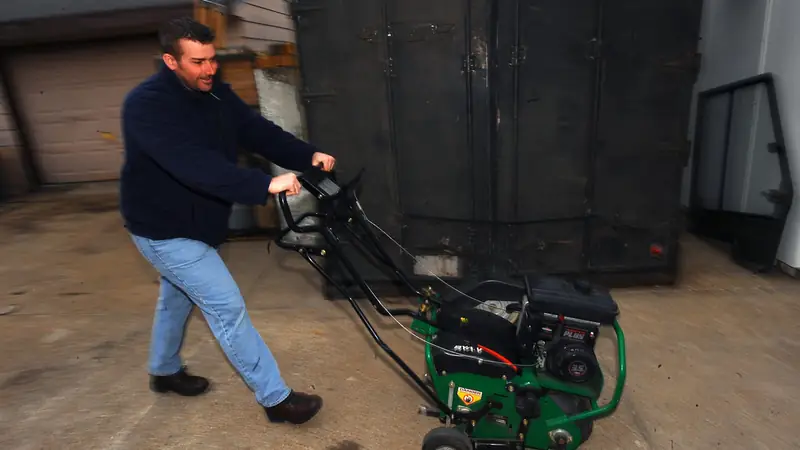
Topdressing is often done right after core aeration: the holes give the material somewhere to go, and Clemson notes organic matter can be added immediately after aerating. If compaction is not a problem, aeration is not necessary first. See when to aerate your lawn.
When to topdress
Like aeration, topdress during the lawn’s active growing season, so the grass grows up through the layer quickly — fall or spring for cool-season grasses, late spring and summer for warm-season grasses.
Step by step
- Mow, and aerate first if the soil is compacted.
- Measure the area and order the material (above).
- Spread small piles and rake or drag them out evenly, no more than ½ inch deep.
- Work the material down between the blades with the back of a rake; brush off any that covers the leaves.
- Water lightly to settle it. Repeat in a later season to level deeper hollows gradually.
Sources
- Clemson Cooperative Extension HGIC 1227 — Topdressing a Home Lawn — Topdressing materials, when sand is appropriate, maximum depth per application and pairing with aeration.
- Clemson Cooperative Extension HGIC 1200 — Aerating Lawns — Signs of compaction, timing for cool- and warm-season grasses, core aeration equipment and practice.
Sources were checked when this guide was published. Where published guidance differs, this guide says so; for structural work, follow your local specification.
Worked examples are generated by the same tested calculation engine as our calculators. See our editorial policy and methodology.