On this page (6 sections)
Soil compaction is the hidden problem behind many thin, patchy lawns. Clemson Extension explains that when the top 4 to 6 inches of soil are compressed — by foot traffic, pets, vehicles, construction or heavy rain — water runs off instead of soaking in, roots stay shallow and the grass weakens. Core aeration is the fix.
Does your lawn need aerating?
- Screwdriver test: push a screwdriver into moist soil. If it goes in easily, you probably do not need to aerate; if it is hard to push in, you may. (Test when the soil is moist — dry soil is hard anyway.)
- Walk test: if the lawn feels rock-hard underfoot, compaction is likely.
- Water ponds or runs off instead of soaking in.
- Thinning in traffic paths — the routes people, pets and mowers take.
When to aerate
| Grass type | Best time |
|---|---|
| Cool-season (Kentucky bluegrass, tall fescue) | Fall — with at least 4 weeks of good growing weather left |
| Warm-season (zoysia, centipede, St. Augustine, bermuda, carpetgrass) | Late spring and summer, during active growth |
Timing from Clemson Extension HGIC 1200.
Choose a mild day when the soil is moderately moist. Do not aerate wet soil — it is messy and compacts further; if soil sticks to your shoes, wait. After aerating in a dry spell, watch the watering, because aerated turf dries out faster.
How often?
“As often as needed,” says Clemson — from once every couple of years on light soils with little traffic, to two to four times a season on heavy, poorly drained soils with heavy traffic. High-traffic areas and grasses with poor wear tolerance, such as centipede and St. Augustine, may need it more often.
How to aerate
- Small areas: a spading fork pushed in at least 4 inches and rocked back and forth, or a hand coring tool, which removes plugs instead of pushing soil aside.
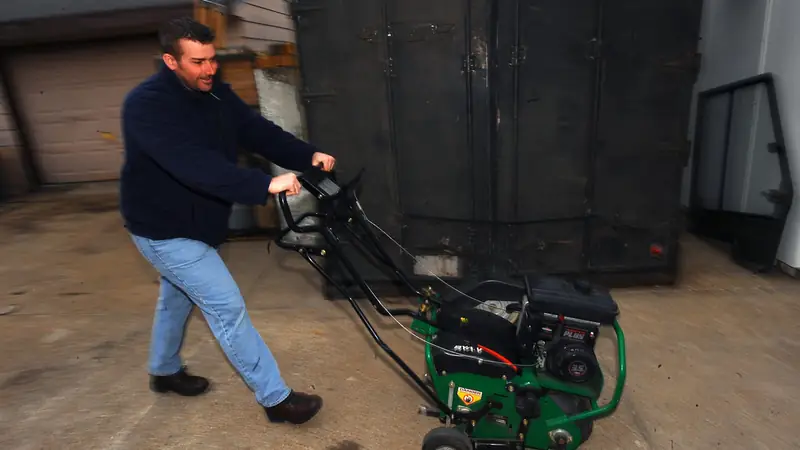
- Larger lawns: rent a powered core aerator. Clemson notes tines typically penetrate 2 to 3 inches and should be spaced 2 to 3 inches apart; closer spacing relieves compaction better.
- Go over the lawn twice, the second pass at right angles to the first.
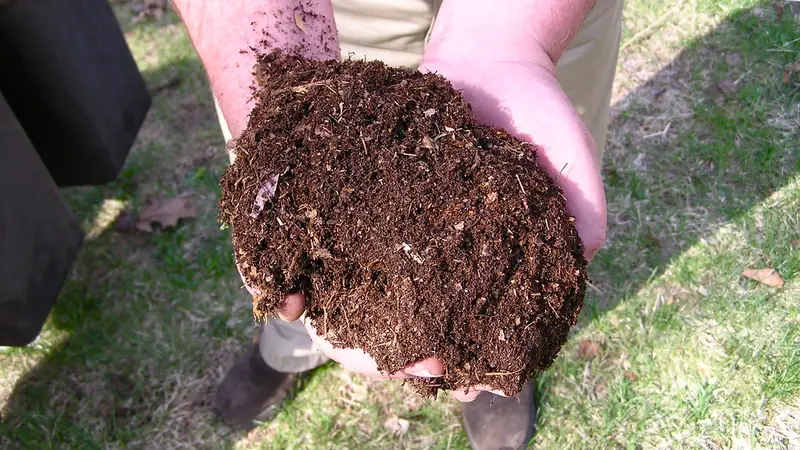
- Leave the cores to break down — or rake them in. They return soil and thatch-decomposing microbes to the surface.
Combine with seeding or topdressing
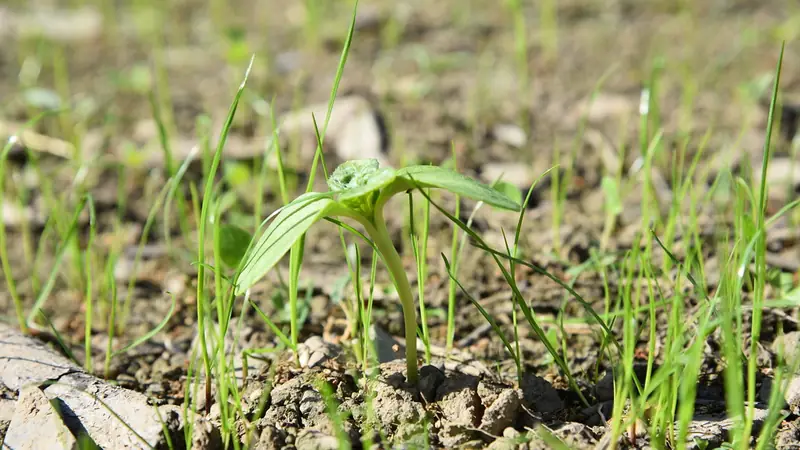
- Seeding: for sparse areas, Clemson suggests six to 10 passes to make holes at least 4 inches apart, then allowing the holes about a month to heal before seeding to avoid a speckled look. Work out seed with the Grass Seed Calculator.
- Topdressing: compost can go down right after aerating — see how to topdress a lawn.
- Weed control: apply pre-emergent herbicide after aerating, not before; aerating breaks the protective layer.
Sources
- Clemson Cooperative Extension HGIC 1200 — Aerating Lawns — Signs of compaction, timing for cool- and warm-season grasses, core aeration equipment and practice.
- Clemson Cooperative Extension HGIC 1227 — Topdressing a Home Lawn — Topdressing materials, when sand is appropriate, maximum depth per application and pairing with aeration.
Sources were checked when this guide was published. Where published guidance differs, this guide says so; for structural work, follow your local specification.
Worked examples are generated by the same tested calculation engine as our calculators. See our editorial policy and methodology.