On this page (8 sections)
Clemson Extension lists planting too deeply, and watering too little or too much, as among the most common and serious tree-planting errors. Get those right and a young tree establishes fast. These steps follow Clemson’s fact sheet Planting Trees Correctly (written for South Carolina, but the principles apply widely).
When to plant
Container-grown trees can be planted year-round, but Clemson says they are best planted in fall: roots keep growing through the mild fall and winter while the top is dormant, so the tree is better established before summer. Balled-and-burlapped (B&B) trees are mostly dug and planted in the cooler months after leaf drop.
Prepare the site
- Drainage first. Clemson calls poorly drained soil a leading cause of plant problems. On wet sites, plant in a raised bed 8 to 12 inches above grade.
- Test the soil a few weeks before planting — Clemson notes most ornamentals prefer pH 5.8 to 6.5. See how to test your soil.
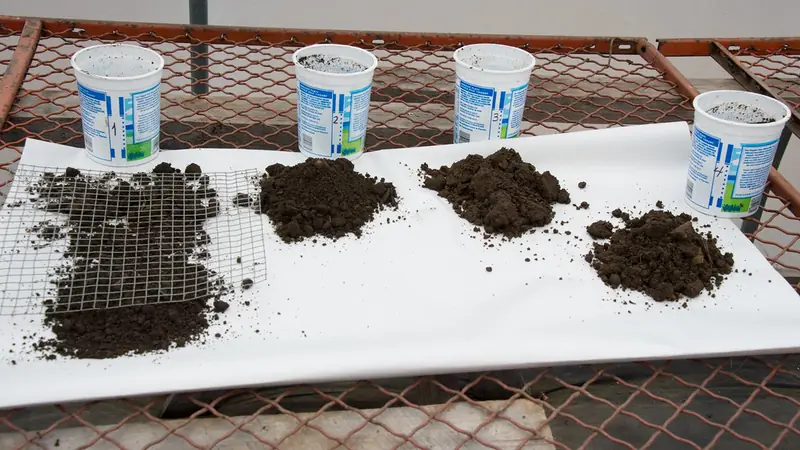
- Amend the whole area, not the hole. Clemson says organic matter works best mixed throughout the root zone; an amended hole in heavy soil can keep roots circling inside it. Around new construction, clear debris and loosen compacted soil.
Dig to the right depth
- In well-drained soil, never dig deeper than the height of the root ball, and leave the soil under it undisturbed so the tree doesn’t sink (Clemson).
- Set the topmost roots level with the soil surface. Clemson warns that as little as half an inch of excess soil over the root ball can stop water reaching it.
- In poorly drained or compacted soil, set the root ball 2 to 4 inches higher than the surrounding soil, building soil up the sides but not over the top.
- In heavy clay, notch the sides of a round hole with a shovel so roots can escape into the native soil (Clemson).
Prepare the roots
- Container trees: cut any circling roots. If pot-bound, make three or four slices 1 to 2 inches deep from top to bottom of the root ball (Clemson).
- Balled and burlapped: synthetic burlap does not decompose and can girdle the tree, so remove it entirely (Clemson’s test: natural burlap burns, synthetic melts). Natural burlap can stay on the sides and bottom but always comes off the top. Remove straps around the trunk and at least the top of any wire basket.
- Bare-root trees: dig wide enough to spread the roots without bending them; trim only dead or damaged roots.
Backfill
Clemson’s best backfill is the loosened soil from the hole mixed with 10 to 20% compost. Break up clods, fill the bottom half around the root ball, tamp lightly with your foot, then finish filling and tamp gently again — firm, not compacted. Avoid fine peat moss in the hole, which can hold too much water.
Water ring, mulch and water
- Build a 3-inch-high water ring around the edge of the root ball to hold water over the roots (Clemson).
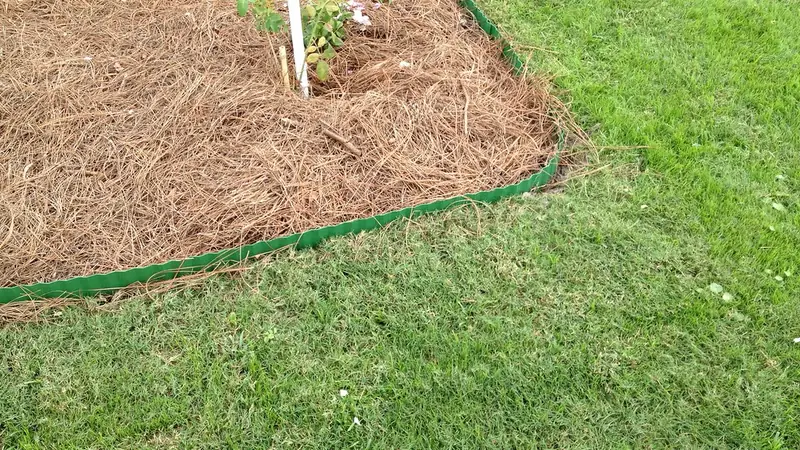
- Spread 2 to 4 inches of organic mulch over the planting area, kept off the trunk — see how to mulch around trees. A 4-ft ring 3 inches deep is about 3.1 cu ft; use the Mulch Calculator for more trees.
- Water slowly and well. Keep the root ball constantly moist but not saturated for the first few months; well-drained sites need more water, poorly drained ones less. Remove the water ring by the end of the second growing season if it hasn’t settled (Clemson).
Pruning at planting
Clemson advises little or no pruning at planting — pruning does not help a tree overcome transplant shock unless it is short of water. Remove only injured, diseased or dead branches, and correct poor structure early.
Sources
- Clemson Cooperative Extension HGIC 1001 — Planting Trees Correctly — When to plant, planting depth, container and balled-and-burlapped trees, backfill, water rings and mulch.
Sources were checked when this guide was published. Where published guidance differs, this guide says so; for structural work, follow your local specification.
Worked examples are generated by the same tested calculation engine as our calculators. See our editorial policy and methodology.