On this page (5 sections)
A conventional driveway or patio sheds every drop of rain onto the street. A permeable one lets it soak in. Illinois Extension describes permeable surfaces as materials that let rainwater and snowmelt infiltrate into the soil or gravel below, helping reduce flooding and improve local water quality — and notes homeowners are often interested in permeable driveways, sidewalks and patios.
The main types
The US EPA describes three types of permeable pavement, all of which can generally replace conventional pavement for driveways and walkways:
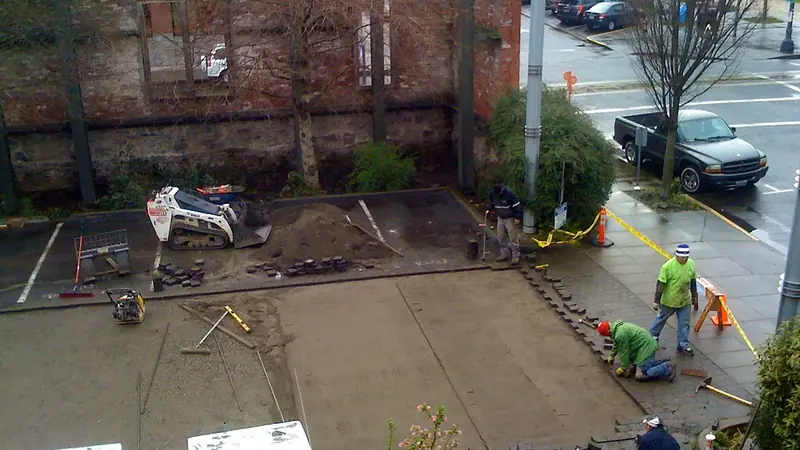
- Permeable interlocking concrete pavers (PICP) — concrete pavers with small openings between them, filled with highly permeable small aggregate. EPA notes they are typically 80 mm (3⅛ in) thick for vehicle areas and 60 mm (2⅜ in) for pedestrian areas.
- Porous asphalt — asphalt with reduced sand and fines, typically 2 to 4 inches thick.
- Pervious concrete — cement, open-graded coarse aggregate and water, typically 4 to 8 inches thick.
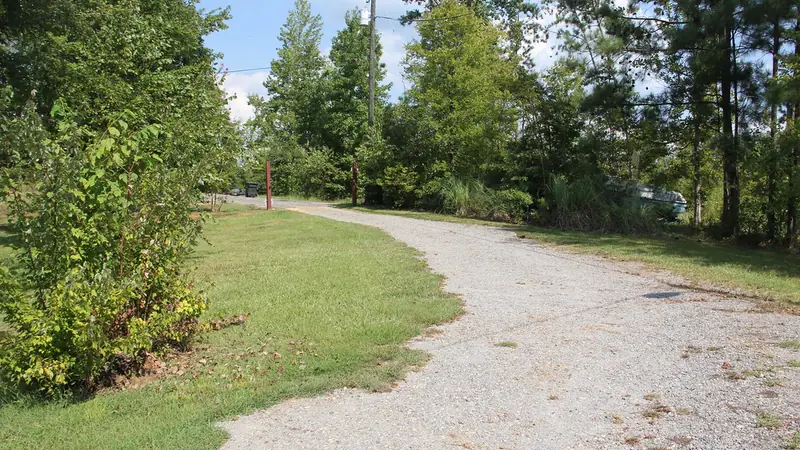
EPA distinguishes these from concrete grid pavers filled with soil and grass, which infiltrate water at lower rates, generally lack a crushed-stone base, and suit occasional traffic such as overflow parking. A plain gravel driveway also lets water through, but it does not store water in an engineered stone reservoir the way these systems do.
What is underneath
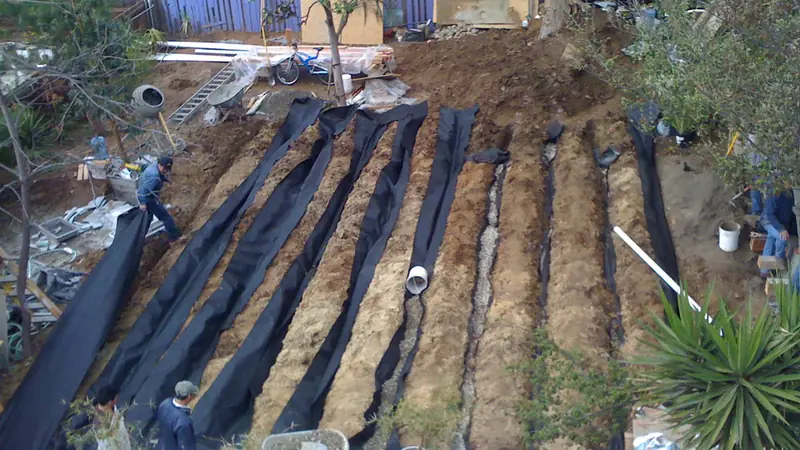
EPA stresses that the layers below are as important as the surface. Typical components from top to bottom (actual thicknesses vary by project):
| Layer | Typical thickness | Material |
|---|---|---|
| Bedding / choker course | 1–2 in | Small, uniformly sized aggregate |
| Base reservoir | 3–4 in | Uniform crushed stone, e.g. No. 57 |
| Subbase reservoir | 4 in minimum, can exceed 24 in | Larger uniform stone, ¾–2½ in |
| Geotextile (optional) | — | Separates subbase from soil |
From US EPA, Permeable Pavements fact sheet (2021). EPA notes a subbase may not be required for pedestrian or residential driveway applications, in which case the base is made larger.
Two details differ from ordinary paving: the subgrade soil should not be compacted (it needs to absorb water), and on clay soils designers often add depth, an underdrain pipe, or a liner where infiltration is not wanted. On slopes over 2%, EPA notes the subgrade may need terracing so water does not run through the stone layers downhill.
Example: stone for a 40 × 12 ft permeable paver driveway with a 4-inch base and 2-inch bedding layer.
- Base: 40 × 12 × (4 ÷ 12) ÷ 27 = 5.93 yd³
- Bedding: 40 × 12 × (2 ÷ 12) ÷ 27 = 2.96 yd³
Illustrative depths only — your designer or the paver manufacturer sets the real ones. Use the Cubic Yard Calculator for your sizes and the Paver Patio Calculator for the pavers themselves.
Maintenance: preventing clogging
EPA identifies clogging by fine sediment as the most common maintenance concern. It reduces infiltration over time, though long-term rates usually stay well above 1 inch per hour. Its key points:
- Do not use sand for snow or ice treatment.
- Keep sediment off: avoid draining bare soil or construction areas onto the pavement until they are stabilized.
- Vacuum sweeping can restore permeability; for pavers with badly clogged joints, the joint aggregate can be replaced.
- Do not install where hazardous materials are handled or where fuel spills are likely.
Pros and limits
- Longer life in cold climates: EPA cites porous asphalt parking lots lasting more than 30 years against about 15 for conventional lots in cold climates, and pervious concrete lasting 20 to 40 years when properly built, thanks to better drainage and less freeze-thaw stress.
- Not for heavy loads: permeable pavements are not as strong as conventional ones.
- Accessibility: EPA notes paver designs with large aggregate-filled openings can be hard going for wheelchairs, bicycles and high heels.
- Design help: Illinois Extension recommends bringing in a consultant for the design.
Check whether your city or county offers a stormwater rebate before you build.
Sources
- US EPA — Stormwater Best Management Practice: Permeable Pavements (EPA-832-F-21-031W) — Types of permeable pavement, typical layer thicknesses, installation, clogging and maintenance.
- Illinois Extension — Permeable Surfaces (Rainfall Management) — What permeable surfaces are and when homeowners should bring in a consultant.
Sources were checked when this guide was published. Where published guidance differs, this guide says so; for structural work, follow your local specification.
Worked examples are generated by the same tested calculation engine as our calculators. See our editorial policy and methodology.