On this page (8 sections)
Composting turns yard and kitchen waste into a dark, crumbly soil amendment. Clemson Extension notes that compost breaks up heavy clay, helps sandy soil hold water and nutrients, releases nutrients for plants and carries beneficial microbes — and it keeps yard and food waste out of the landfill. The process happens in nature anyway; you simply speed it up.
What to compost — and what not to
| Examples | |
|---|---|
| Browns (carbon-rich) | Fall leaves, woody trimmings, shredded paper, pine needles |
| Greens (nitrogen-rich, usually moist) | Grass clippings, vegetable and fruit scraps, coffee grounds and filters, tea bags |
| Also fine | Crushed eggshells, spent flowers, garden plant remains, weeds that have not gone to seed |
| Leave out | Meat, dairy, oils and grease, pet and animal waste, weeds with seeds, diseased plants |
From Clemson HGIC 1600. Clemson does not recommend adding animal manure to a home pile, and suggests drying weeds with storage roots (such as nutsedge) in the sun before composting them.
Balance browns and greens
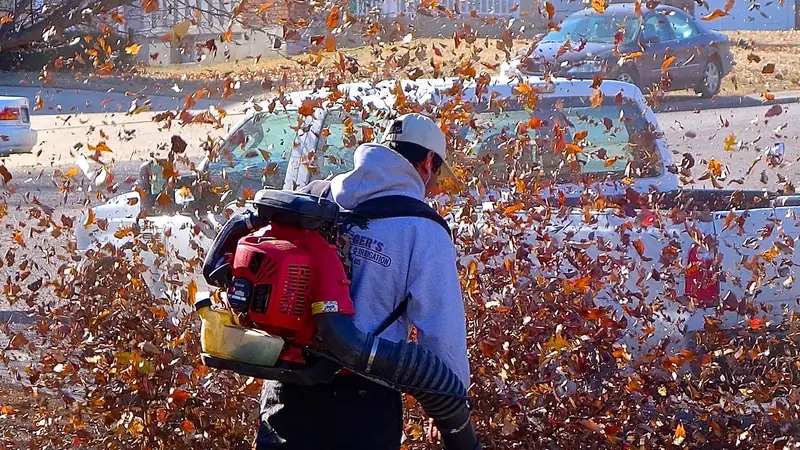
Microbes need carbon and nitrogen. Clemson gives the ideal ratio as about 30 parts carbon to 1 part nitrogen by weight. Too much nitrogen (too many greens) and the pile smells of ammonia; too much carbon (too many browns) and decomposition slows. Illinois Extension points out that a mower bag of leaves and grass clippings already contains both. Chopping or shredding materials speeds things up (Clemson).
Pile size
Clemson recommends a pile at least 3 × 3 × 3 feet (27 cu ft, or 1 cubic yard) and no bigger than 5 × 5 × 5 feet (125 cu ft, about 4.6 cubic yards). Smaller piles struggle to hold heat; bigger ones don’t get enough air and are hard to turn.
Moisture and air
- Damp, not soggy — like a wrung-out sponge or damp rag (Clemson). Too dry and nothing happens; too wet and it smells.
- Turn it with a fork or shovel about once a week to give the microbes oxygen. If you can’t turn it, poke holes with a tool handle — an unturned pile just takes longer (Clemson).
- Illinois Extension suggests sprinkling in some garden soil as you build the pile to bring in microbes.
Hot or slow?
- Hot (fast) composting: balance browns and greens, keep pieces small, manage moisture and turn often. Clemson notes most harmful pathogens and weed seeds are destroyed above 140°F — check with a long compost thermometer at least 12 inches into the pile.
- Slow composting: add materials as they come. Less work, slower results — and because the pile may never get hot enough, Clemson advises keeping weed seeds and diseased plants out of any home pile.
Bins
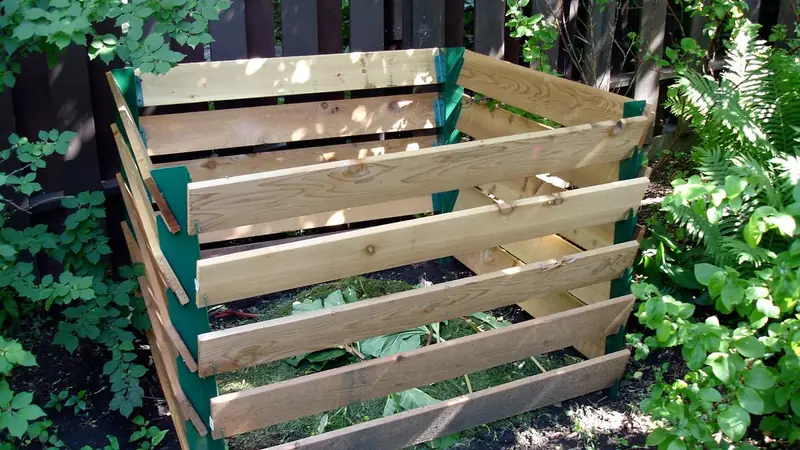
Clemson describes three common setups: a single-chamber bin (pallets, wire mesh or bought) where you add layers on top and harvest from the bottom; a three-chamber unit that works like an assembly line for fast composting; and a tumbler that you rotate to mix. Look for ventilation, and a lid to keep out excess rain and scavengers.
When is it ready?
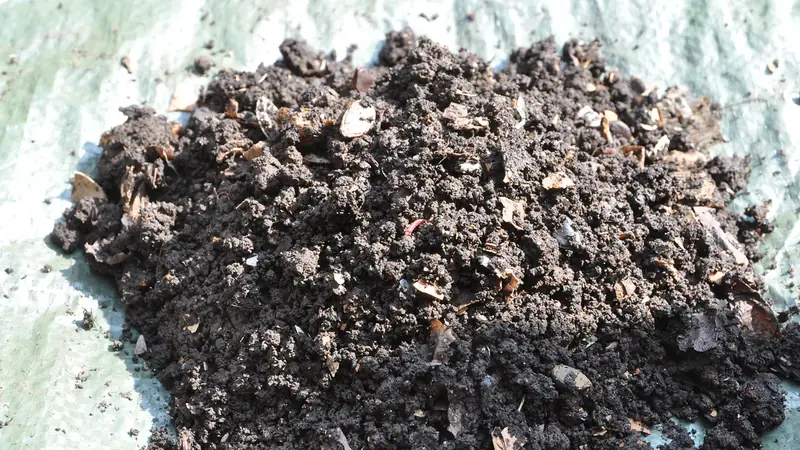
Finished compost is dark brown or black, smells earthy and no longer looks like what went in; screen out any larger chunks (Clemson). Clemson stresses it is a soil amendment, not a fertilizer. Use it to improve beds — see how much compost to add and the Compost Calculator.
Sources
- Clemson Cooperative Extension HGIC 1600 — Composting — What to compost and avoid, carbon-to-nitrogen ratio, pile size, moisture, aeration, temperature and bins.
- Illinois Extension — What to Do with All Those Leaves — Building a leaf-and-clippings compost pile.
Sources were checked when this guide was published. Where published guidance differs, this guide says so; for structural work, follow your local specification.
Worked examples are generated by the same tested calculation engine as our calculators. See our editorial policy and methodology.